

Description
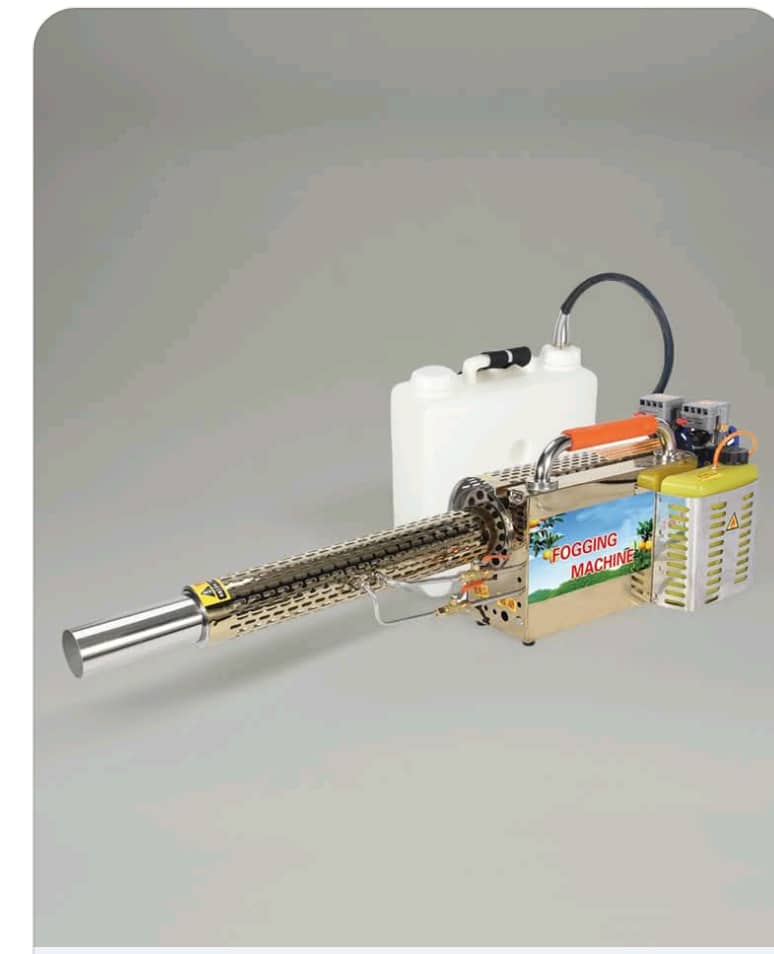
Thermal Fogging Machine (Pulse-Jet Vector Control Fogger)
Thermal fogging machine, often powered by a miniature pulse-jet engine or thermal heating block. This professional-grade equipment vaporizes liquid solutions into an ultra-fine fog or mist, highly valued for broad-spectrum dispersion in pest management and large-scale agricultural sanitation.
Main Uses
- Vector control and mosquito eradication (malaria, dengue prevention)
- Agricultural pest control in greenhouses and plantations
- Public health disinfection and sanitation in warehouses or livestock facilities
- Odor control and environmental decontamination
- Crop protection against fungal diseases through targeted canopy fogging
Key Features
- Pulse-Jet Propulsion / Thermal System: Efficiently converts liquid formulations into a dense, fine thermal fog with optimal droplet size for maximum hang time.
- Dual-Tank Configuration: Features a separate, durable translucent solution/chemical tank alongside a dedicated fuel or power assembly.
- Stainless Steel Extension Barrel: Designed with a protective heat shield sleeve over a high-grade stainless-steel barrel to ensure operator safety during continuous high-temperature discharge.
- Compact Portable Chassis: Built with an integrated top handle for uniform weight distribution, allowing for mobile, manual field operation.
Technical Specifications
| Technical Metric | Specification Value |
| Engine Type | Resonant Pulse-Jet Thermal Engine (approx. 22–24 KW / 30 HP) |
| Droplet Particle Size | 5 to 50 microns (creates ultra-fine drifting aerosol mist) |
| Chemical Tank Capacity | 15 Liters (translucent high-density composite tank) |
| Fuel Tank Capacity | 1.5 to 2.0 Liters |
| Fuel Type | Pure, unleaded regular gasoline (92 octane or higher) |
| Fuel Consumption Rate | Approx. 1.5 to 1.9 Liters per hour |
| Discharge Flow Rate | 80 to 100 Liters per hour (depending on chemical nozzle configuration) |
| Ignition Power Source | 6V DC or 12V rechargeable Lithium battery with electronic push-start |
| Net Weight (Empty) | Approx. 7.5 kg to 7.8 kg |
| Chassis Dimensions | Approx. 110 cm × 28 cm × 33 cm |
Chemical Handling & Operational Safety Guidelines
Operating a thermal fogging device introduces chemical exposure, respiratory risks, and high-temperature thermal hazards. The following guidelines must be followed rigorously: [3]
- Mandatory Personal Protective Equipment (PPE)
- Respiratory Defense: Always wear an industrial half-face or full-face respirator outfitted with an organic vapor/P100 particle cartridge to prevent inhalation of aerosolized chemicals. [4]
- Dermal & Eye Protection: Use heavy-duty, elbow-length nitrile chemical gloves, tightly fitting splash safety goggles, and long-sleeved hazardous material coveralls. [4]
- Chemical Footwear: Wear high-top rubber work boots or protective chemical boots. Avoid eating, drinking, or smoking anywhere near the application area.
- Formulations, Mixing, & Dilution
- Check Product Labels: Ensure the chemical is explicitly rated for thermal fogging systems. Most standard thermal units require oil-based or petroleum-based emulsifiable concentrate (EC) formulations; using incorrect or unapproved water mixtures without a special conversion adapter can damage the resonant engine.
- Filter When Filling: Always pour mixed solutions through a mesh-filtered funnel when transferring liquids into the chemical tank to prevent debris from choking the internal fine nozzles.
- Calculate with Precision: Only mix the volume of chemical solution required for immediate field operations to limit chemical accumulation and environmental waste.
- Field Operation & Post-Application Protocols
- Starting Environment: Always initiate the pulse-jet ignition outdoors or in wide, openly ventilated areas. Never start the combustion system inside enclosed or confined environments.
- Shut-down Sequence: Prior to stopping the motor, always close the solution/medicine valve completely first, wait for the fog stream to stop clearing the barrel, and then turn off the engine flame switch. Failure to close the chemical lines first can cause raw chemicals to backflow into a hot exhaust barrel, risking an ignition flash.
- System Flushing: Drain any unused chemicals completely after every work session. Flush the lines by running a small amount of clean solvent or recommended flushing carrier through the system to prevent persistent residues from hardening inside the nozzle openings.


